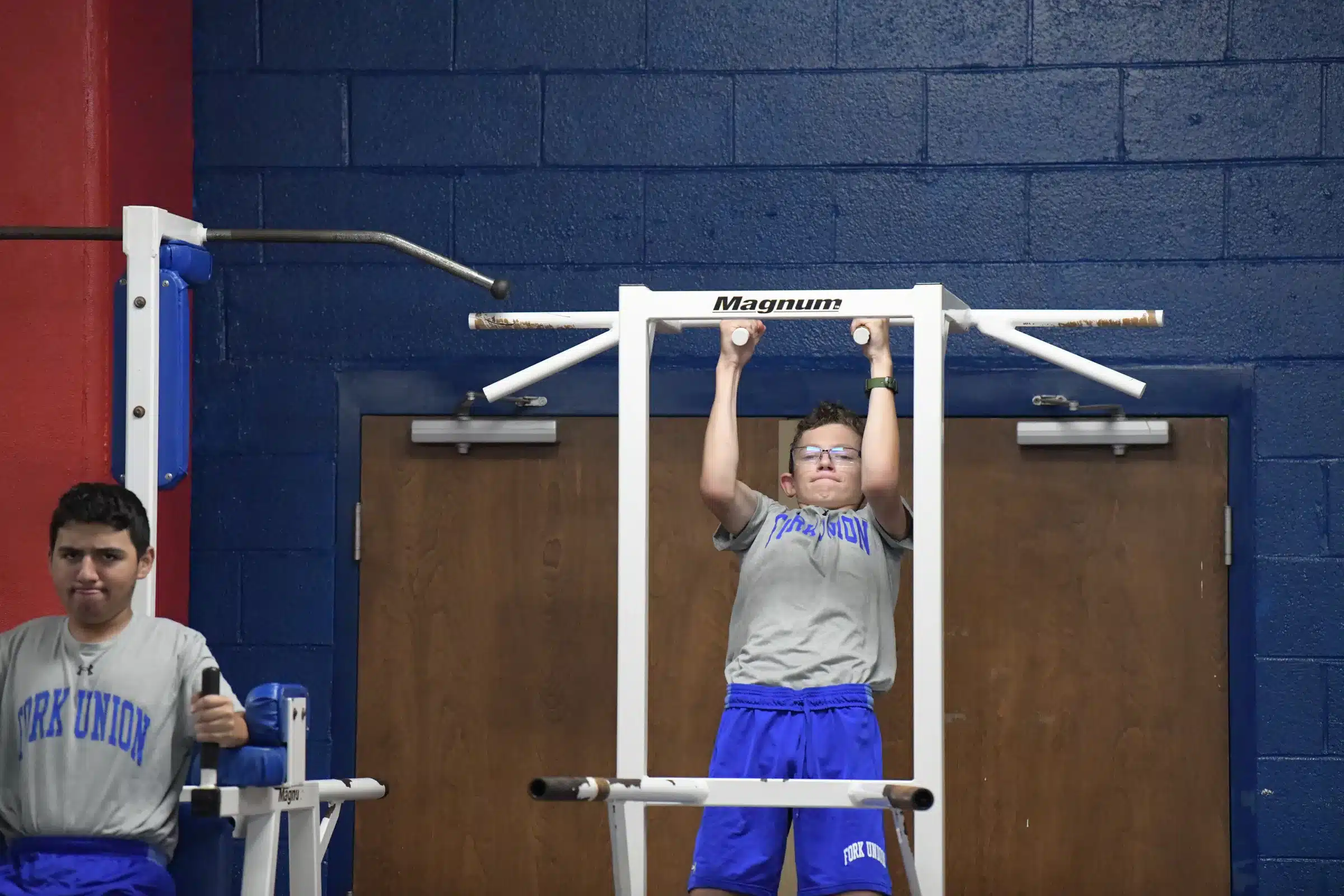
The short answer: Among summer programs for unmotivated teens, Fork Union Military Academy's Summer Academy is a four-week residential program for boys in grades 7–12. For many cadets, the structured 16-hour day — built around the One Subject Plan, daily physical training, and supervised free time — provides a focused break from screens and a measurable shift in self-management. In a recent summer cohort, parents reported notable changes in sleep, attention, and confidence by the end of week three.
It was 11:14 AM on Wednesday, June 11, 2025, and [PARENT NAME OR PSEUDONYM — e.g., "Erin"] was shouting up the stairs at her son for the fourth time.
He had finished eighth grade two weeks earlier. He had not gotten out of bed before 11:30 a single day since. He had played Fortnite until 2:00 AM the night before. He had eaten cereal in front of the kitchen island, watched a YouTube creator she had never heard of, and said exactly three sentences to her all morning, two of which were "yeah" and "I don't know."
She was not searching for boarding school. She was searching for anything that would interrupt the loop.
This is the story of what she found, what it cost, and what her son was doing forty-six days later. She has given her permission for it to be shared, with names withheld. The dates, measurements, and quoted exchanges are real.
[PARENT NAME] had tried, in the previous twelve months:
The part-time job and the sports camp had cost a combined $2,100. They had produced nothing.
Her husband had been skeptical of military school. He had a friend whose nephew had been to a different program and "come out the same kid, just angrier." But he made a phone call to FUMA's Director of Summer Programs at his wife's request and came off the call quieter than he had been when he picked it up.
"She didn't try to sell me anything," he told his wife afterward. "She asked me what I was hoping for. I told her. She said: 'Okay, summer might give you part of that.'"
The conversation with their son was on a Sunday evening at the kitchen table. He resisted. He asked questions. He went upstairs. He came back down forty minutes later and asked: "For how long?"
She said: "Four weeks."
He said: "Okay."
She signed the paperwork that night. He left on June 28.
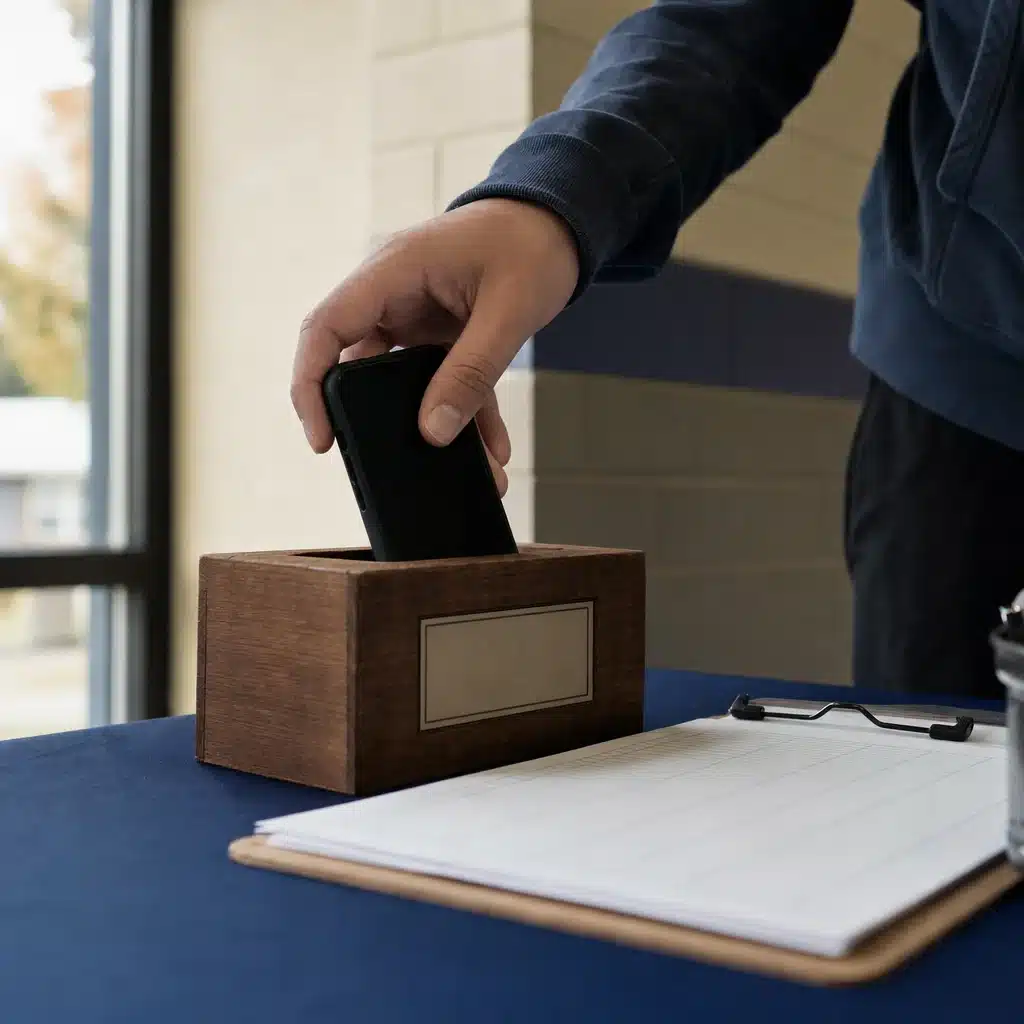
Move-in day was uneventful. He was sullen. He shook the Tactical Officer's hand. His phone was confiscated at check-in and locked in the administrative office. The drive home was quiet.
On day three, [PARENT NAME] got a call from the campus phone. Her son's voice was small and angry. He said:
"This is awful. Get me."
She had been coached by the Director of Summer Programs for exactly this call. She held the line.
"I love you. See you July 25."
She hung up. She walked to her bedroom. She cried for forty minutes.
By day six, the calls had stopped. The TAC sent a brief update: he was eating, he was sleeping, he was forming into a unit. He had not asked about the phone in three days.
The letters started arriving on day eight.
The first one was three sentences long and asked if she could send M&Ms. The second one, on day eleven, was longer. He mentioned a roommate by first name. He mentioned a math teacher he liked. He used the word "we" twice, referring to his squad.
"We have a thing on Saturday. I don't really get it but it's fine."
She read the letter at the kitchen table and noticed something she had not noticed in eighteen months. He had used a capital letter at the start of each sentence. He had not done that, voluntarily, since seventh grade.
On day seventeen, the campus phone rang again. This time, the voice was different.
"Mom. Can I stay for the school year?"
She did not have an answer ready. She told him she needed to talk to his father. She got off the phone and sat on the front porch for an hour without moving.
The week-three TAC update included three things that hit her in different orders:
She did not know who that boy was.

Move-out day was July 25, 2025.
He hugged his TAC. The TAC nodded once. He carried his own footlocker to the car without being asked. He hugged his roommate. The drive home was different than the drive there had been. He was tired in a way that came from working, not avoiding. He fell asleep with his head against the passenger window forty miles south of campus.
The first morning home, July 26, [PARENT NAME] came downstairs at 7:00 AM and her son was already there. He had made his bed. He was eating breakfast at the table, not standing at the island. He asked her how she had slept.
She wrote that down in her phone notes app because she was afraid she would forget.
He asked for his phone back on July 28 — day three of being home, not day one.
For peer-authoritative context on adolescent screen time and behavior, see the American Academy of Pediatrics' family-media guidance at HealthyChildren.org.

The numbers, before and after, as recorded by [PARENT NAME] and confirmed by FUMA Summer Academy fitness records:
| Domain | Before (June 14, 2025) | After (August 1, 2025) |
|---|---|---|
| Wake time (weekday) | 10:30 AM – noon | 6:45 AM unprompted |
| Daily screen time | 6.5 hours | Self-set limit of 90 min |
| Eye contact in conversation | Rare | Consistent |
| Reading for pleasure | 0 books in 4 months | 2 books in 3 weeks |
| Mile run time | Did not complete | 9:20 |
| Conflict at home (parent-reported, weekly) | 4–5 incidents | 1–2 incidents |
| Sleep onset | 1–2 AM | 10:30 PM |
Source: parent self-report and FUMA Summer Academy fitness records. Cadet name withheld for privacy.
We need to be honest about what FUMA Summer Academy is and what it isn't.
It is a structured residential immersion in routine, accountability, athletics, focused learning, and male peer culture under adult supervision.
It is not a therapeutic program, a punishment, a behavioral intervention, or a substitute for clinical care when clinical care is what is needed.
If your son is in active mental health crisis, struggling with substance use, or displaying violent or self-harming behavior, FUMA is not the right call. Therapeutic boarding schools and residential treatment programs exist specifically for those needs. FUMA's Admissions team will tell you the same thing if you ask them directly — and they will help route you toward the right resource.
The boys for whom Summer Academy works tend to share a profile: they are not in crisis. They are drifting. They have lost the muscle of structured days. They have peer cultures that no longer challenge them. They have the capacity to thrive but not the conditions.
The summer is the conditions.
[QUOTE: 100 words from the Director. Real name, real role. The version below is a writer's draft for SME review — replace with the Director's actual approved language before publish.]
"Most boys who come to Summer Academy don't have a 'problem.' They have a vacuum of structure. We provide that structure for four weeks, and what they often find is that they liked themselves better when their day had shape. That insight tends to outlast the summer."
— [DIRECTOR OF SUMMER PROGRAMS NAME], Director of Summer Programs, Fork Union Military Academy
Our five-minute Readiness Quiz takes the inputs you would discuss with the Director on a phone call — your son's daily patterns, what you have tried, what you are hoping to change — and returns a personalized PDF on fit.
Take the "Is My Son Ready?" Quiz.
It is the most honest five minutes you can spend before scheduling a call with Admissions.
[PARENT NAME] sent a text to her husband on August 14, 2025 — three weeks after move-out and one week before the school year started:
"He asked me tonight when he can go back."
He started the school-year program at FUMA in September.
Can military summer camp help an unmotivated teenager?
For many boys, a structured residential summer program like Fork Union Military Academy's Summer Academy provides a four-week interruption to passive habits — screens, late sleep, low engagement — and replaces them with daily routine, athletics, focused learning, and supervised peer interaction. Most parents report measurable changes in sleep, attention, and self-management by the end of week three. It is not a clinical intervention.
How long does FUMA Summer Academy last?
Four weeks total, from June 28 to July 25, 2026. Families can enroll for one 4-week session or two back-to-back 2-week sessions.
Is military summer camp the right choice for a boy with ADHD?
Many boys with ADHD respond well to FUMA's structured environment because the day's predictability reduces decision fatigue and the active schedule reduces restlessness. FUMA is not, however, a therapeutic program — boys who require clinical ADHD support or who are in mental health crisis are better served by programs designed for that purpose.
What if my son resists going?
Most boys resist before, struggle in week one, and acclimate by week two. The Director of Summer Programs and Tactical Officers are specifically prepared for this transition. Parents who hold the four-week commitment, even when called by an unhappy son on day three, typically report the strongest week-four outcomes.
Can a 4-week program really change a teenager?
A 4-week program does not change a teenager's personality. It can, however, change his habits, his confidence, and his self-perception — the components most parents are actually trying to reach when they say "change." Many of those shifts persist when families maintain similar structure at home.
This post was reviewed by [DIRECTOR OF SUMMER PROGRAMS NAME], Director of Summer Programs at Fork Union Military Academy. The family in this story has reviewed and approved its publication. Names withheld for cadet privacy.



This site is protected by reCAPTCHA and the Google Privacy Policy and Terms of Service apply.